


Leonardo Da Vinci
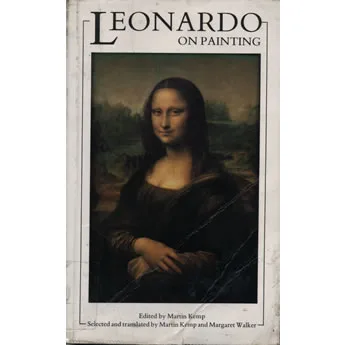
Publisher: Yale University Press in association with the South Bank Centre
ISBN: 0300045093
Leonardo da Vinci (1989)
Yale University Press in association with the South Bank Centre
ISBN: 0300045093
Condition: Used, as reverently scuffed by Crappy Old Books.
At last: a serious, scholarly volume on Leonardo da Vinci, brought to you by Yale University Press and the South Bank Centre, now circulating through the dignified resale ecosystem of a place called Crappy Old Books. Truly, the Renaissance never ends – it just gets re-priced.
This is the kind of art book that was clearly born in a gallery, raised in a reading room, and now finds itself blinking in the harsh light of the second-hand market, wondering what it did wrong. Exhibition catalogue? Monograph? Prestige object? Yes. All of the above.
What’s inside (besides genius in paper form)
This handsome volume is packed with:
-
Reproductions of Leonardo’s paintings
The familiar faces are likely here: yes, that smile, that supper, and those angels who all look like they know something you don’t. -
Drawings, studies, and anatomical sketches
See the mind of a man who could not look at a human shoulder or a water eddy without turning it into 47 pages of diagrams. -
Essays by people who have definitely read more than you
Curators, scholars, and art historians laying out context, technique, influence, and all the bits you pretend you know when you nod thoughtfully in museums. -
Footnotes
The purest expression of intellectual seriousness. Footnotes are where the secret gossip lives.
In short: it’s a guided tour of Leonardo’s brain, but with fewer dissections and more captions.
About the condition (museum-quality content, lived-in exterior)
This copy is Used, which in the sacred grading language of Crappy Old Books means:
-
The dust jacket (if present) may show mild edge wear, as if someone took it on and off repeatedly, then gave up and left it on the nearest flat surface for a decade.
-
The cover corners might be softened, suggesting the book has been gently collided with coffee tables, shelves, and possibly an over-enthusiastic tote bag.
-
Inside, pages may show the faintest suggestion of being actually read, which in art-book terms is borderline shocking.
This is not a shrink-wrapped, untouched “I bought it at the gallery shop to look cultured and never opened it” specimen. This is the copy that had a life: browsed, consulted, possibly used as moral support during an art history essay crisis.
Why you might “need” this (beyond intellectual vanity)
-
You want to look at the art properly, not squint at pixelated thumbnails on a screen while being menaced by notification pop-ups.
-
You enjoy that magical blend of pictures and text where the pictures make you whisper “wow” and the text makes you mutter “oh, that’s why.”
-
You like owning a book that says, “Yes, I know who Leonardo da Vinci is, and not just the turtle.”
And let’s be honest: dropping “According to the Yale/South Bank Leonardo volume…” into a conversation is a powerful social move.
Why a Used art book is secretly ideal
Art books are like people: the ones who’ve been through a little wear are often the most interesting.
With this Used copy:
-
You don’t have to handle it like a bomb made of glossy paper.
Open it flat. Turn pages with your actual fingers. Gesture at details. You’re allowed. -
Any tiny dents or shelf rubs simply make it look legitimately scholarly, like it’s spent time in proximity to somebody’s brain, not just somebody’s coffee table styling.
-
If there are ghostly impressions of past readers—a slightly looser binding near particularly good plates, or a page that opens naturally at a favourite essay—that’s just evidence of appreciation.
It’s the opposite of intimidatingly pristine. It’s inviting.
What this book actually does for you
Leonardo da Vinci (1989) does that valuable thing of:
-
Putting Leonardo in his historical, artistic, and slightly obsessive context.
-
Showing you details you’ve never noticed, like that one strange hand, that odd smudge of shadow, that compositional trick he keeps pulling off.
-
Making you feel both inspired and mildly inadequate, which is the correct reaction to Leonardo.
You’ll be able to:
-
Flip through glorious plates and mutter, “Yes, that sfumato, though.”
-
Read essays and pretend you’ve internally absorbed centuries of scholarship.
-
Casually leave it somewhere visible so visitors think you’re the sort of person who contemplates Renaissance perspective before breakfast.
The sales pitch disguised as cultural uplift
This isn’t just a book. It’s a portable micro-museum, a crash course in genius, and a surprisingly heavy object you can use to flatten other, lesser books.
So here it is:
Leonardo da Vinci (1989) – Yale University Press in association with the South Bank Centre.
Visibly lived-in, internally distinguished, still full of Renaissance smugness.
Proudly Used and somewhat ironically offered to you by Crappy Old Books.
Buy it. Put it on your shelf. Occasionally open it and remember that once, a single human being managed to be artist, scientist, engineer, anatomist, and fashion icon for tunics—
and your greatest achievement this week was buying a Very Serious Art Book second-hand.
Keep browsing: See more Art books Other books by Yale University Press in association with the South Bank Centre
